
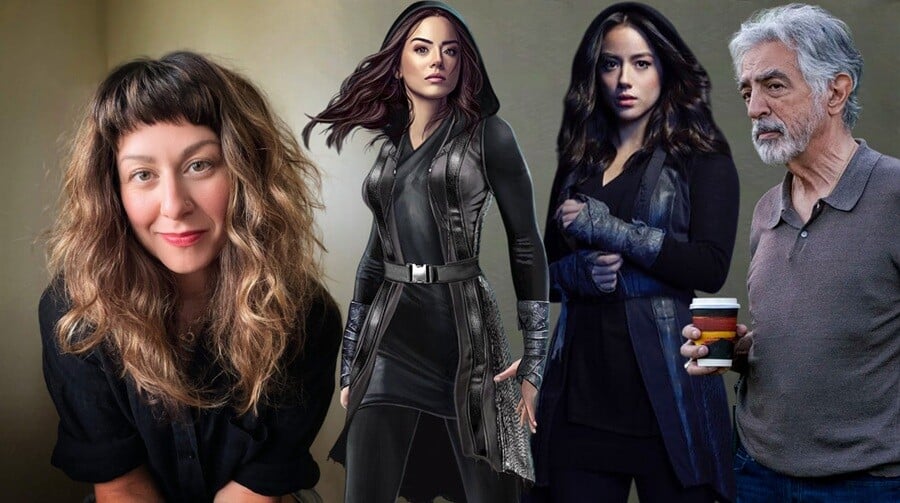
Exclusive Interview with Whitney Galitz, Costume Designer on ‘Criminal Minds: Evolution’ and ‘Agents of S.H.I.E.L.D.’, Who Reveals Her Craft
In the world of television and cinema, where every detail matters in bringing a character to life, the role of the costume designer is often discreet yet essential. Whitney Galitz is one of the most talented figures in this field. With over twenty years of experience, she has worked on a wide range of productions, including Criminal Minds: Evolution, Marvel’s Agents of S.H.I.E.L.D., Dexter, and The Harder They Fall. Trained in costume design for theater at the University of California, Santa Barbara, Whitney has successfully translated her sharp eye for detail and her knowledge of fabrics and silhouettes to the screen, creating cohesive visual universes and deeply embodied characters.
In this interview, she takes us behind the scenes of her craft, shares her creative process, and explains how a simple piece of clothing can reveal a personality, influence a performance, and contribute to the story of a series or film. From her early days in theater to her work on Marvel projects and the BAU of Criminal Minds, Whitney talks about the art of costume design and its role in storytelling.
Interview also available in French.
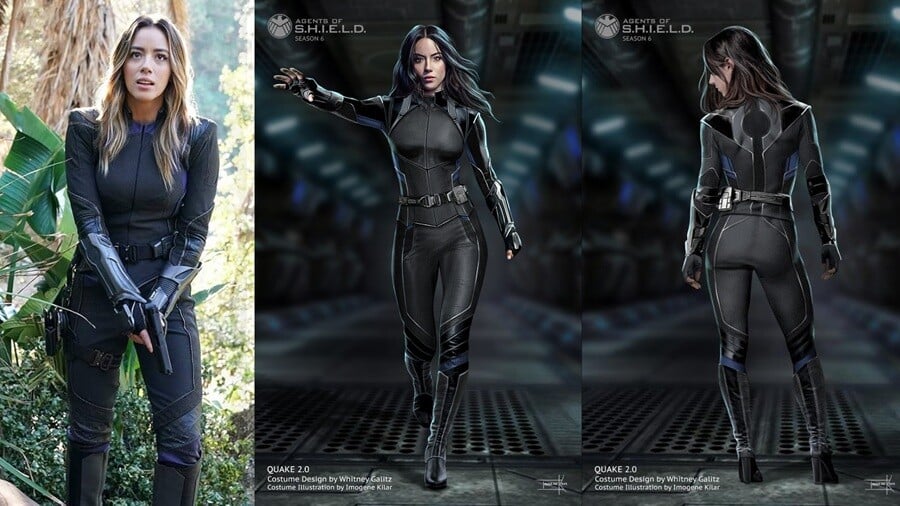
Hi Whitney, first of all, thank you for taking the time to speak with me. You’ve worked on series like Criminal Minds: Evolution, Marvel’s Agents of S.H.I.E.L.D., Dexter, and The Last Ship. Looking back to the very beginning, what inspired you to pursue a career in costume design?
Whitney: I was always interested in art since early childhood. I’ve taken classes in almost every form of studio art and majored in it in college. While I was there, a friend mentioned a rendering class at the drama department next door, and I decided to take it. Back then, costume renderings or illustrations were done in watercolor and gouache—no digital tools yet! After I took the class and learned more about the costume design process for theater, I was hooked. I ended up minoring in costume design and designing plays and dance performances for theater by my senior year.
Your journey started with a training in costume design for theater at the University of California, Santa Barbara. How did that experience prepare you for working in film and television, with their very different rhythms and constraints?
Whitney: I think it made me a stronger designer for film and TV. In theater, you need to have a very broad knowledge base of fabric, how it works with the body, and how lighting interacts with color and texture on fabric. I had to train in every aspect of garment construction, dyeing, aging, etc. By the time I started in TV and film, I had a solid foundation and was able to translate it to the camera.
Whitney applied these skills on Agents of S.H.I.E.L.D., season 7, where she recreated 1930s costumes with incredible accuracy, including underwear and accessories, so that the actors could have an authentic experience both on stage and on screen.
In a production, several roles revolve around costumes: stylist, wardrobe supervisor, costume designer… How do these roles differ, and how do you collaborate with other members of the costume department?
Whitney: The role of Costume Designer is the head of the costume department, responsible for creating the overall look of the show. Below that, the costume supervisor plays an important role in managing the labor, overseeing administrative duties, working directly with production and the costume designer on the budget, and helping with script breakdowns and scheduling. The supervisor is integral to allowing the costume designer to focus on the visual aspects of the role. The term ‘Stylist‘ is more commonly used in print, commercial advertising, and live TV production, where character development is less of a focus.
On television productions like Game of Thrones, wardrobe supervisors manage the inventory of thousands of pieces and oversee the alignment of costumes in scenes, allowing the costume designer to focus on the artistic vision.
Voir cette publication sur Instagram
Before becoming a Costume Designer, you worked as a Key Costumer on series like Dexter and The Last Ship. How did this role prepare you to take charge of the full costume creation for a production? What were your responsibilities at that time?
Whitney: As the Key Costumer on Dexter, my responsibility was managing the costumes coming from the designer and acting as a liaison between the set and the design team. I was close to the actors on set, so if they had any costume-related questions or issues, I could help directly or bring those concerns to the Costume Designer.
The Key Costumer is a supportive role to both the Costume Designer and the Assistant Costume Designer (ACD). On The Last Ship, I was promoted to the ACD role, which is the right-hand role to the Costume Designer. The ACD handles a wide range of duties, including managing the crew, organizing fittings, assisting with research, and participating in meetings. It’s a great preparatory role for stepping into the position of Costume Designer.
On Dexter (seasons 1 and 2), you were very close to the actors and their costumes. The iconic khaki/green outfit that Dexter wears in the kill room became a signature look: simple, practical, almost military, perfectly reflecting his methodical and clinical side. Did you participate in designing this outfit? And can you tell us how the choice of these clothes helped reveal Michael C. Hall’s character?
Whitney: I didn’t have any direct design input for this costume, but I remember the evolution of it being a collaboration between the designer and Michael C. Hall. A lot of these character decisions are worked out in fittings and also on set, sometimes evolving over time as the actor gets into the character.
When you receive a script, what is your approach? Do you start by analyzing the characters’ psychology, or do you first discuss with the director and actors to build a shared vision?
Whitney: Usually, when I get the script, the characters have already been developed to some degree, so I work off of that. There are always meetings where I meet with the writers and director to discuss the story and world-building, and this is also where I pitch my vision for the look. If it’s a new character, I might also discuss with the cast to see how they’re thinking of playing the character or what direction they’d like to go in. That always helps me, too.
Creating a ‘costume bible’ is a standard practice in the industry to maintain visual consistency across multiple seasons, used on series like Stranger Things and The Crown.
Your work heavily involves character creation. How can a costume help an actor understand their role, embody their personality, or even influence their performance? Can you give an example of an outfit that changed the way an actor approached their character?
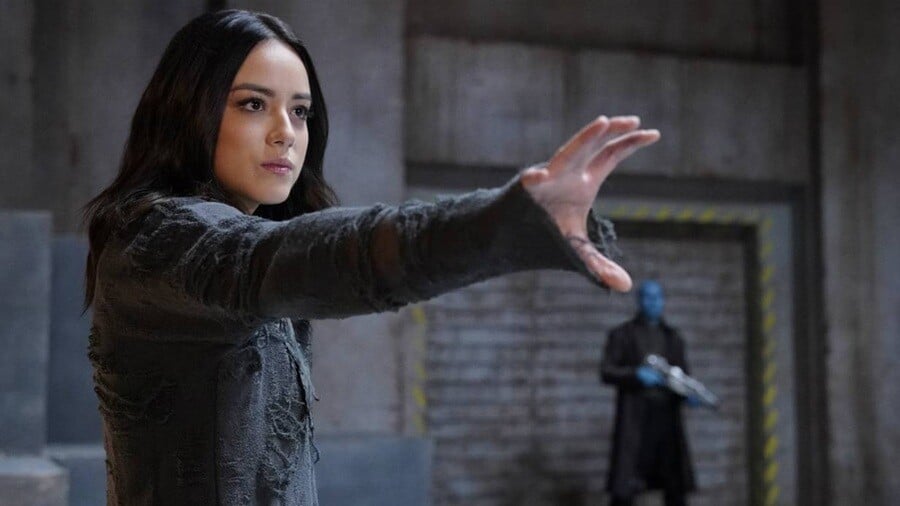
Whitney: This is something that often gets worked out in fittings, and it makes it really fun for me. In TV especially, the pace is so fast that I sometimes have to think about the character before the actor gets the chance to. So when they come in for a fitting, it can help jumpstart the process for them. The genre, fabric, construction, and design all play a role in character development from a costume perspective.
For example, if I’m creating a superhero suit for a Marvel series, the actor needs to negotiate their movements in high-tech fabrics and specialty builds. Or, if I’m designing an evening gown for the 1930s, the actress may approach her role differently depending on the elegance of the gown. Think about how we walk differently in boots or heavy gear—it all plays a part.
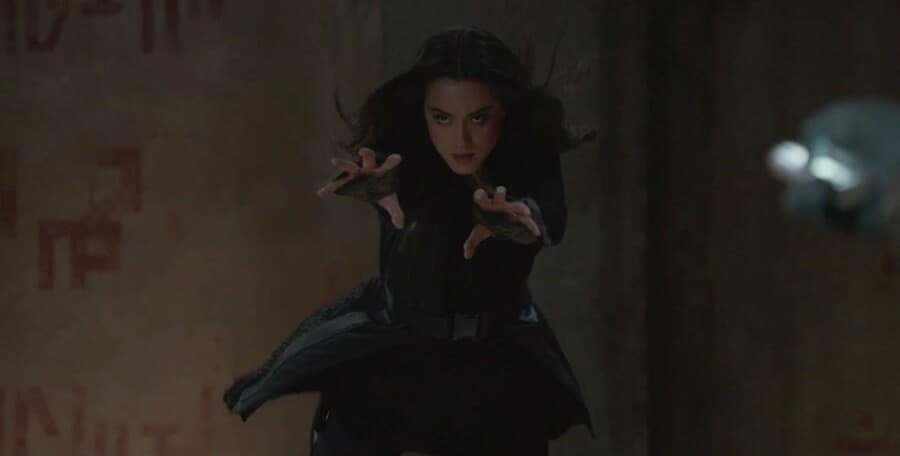
I have many stories like this. A fun one is from Agents of S.H.I.E.L.D. season 5, when Daisy had to fight in a gladiator-type battle as the ‘Destroyer of Worlds’. Chloe Bennet and I actually came up with custom leather hand wraps during a fitting, similar to boxing wraps, so she could use them in her action scenes.
Have you ever encountered a character that was particularly challenging to dress? How did you tackle that challenge?
Whitney: Usually, the challenges arise when there’s a shortage of time or resources. In those situations, my approach is to strip things down to the essentials. I focus on what the character absolutely needs for the camera and script, and then build from there.
Productions like Game of Thrones and The Mandalorian have had to adapt highly complex costumes to filming constraints, which is a common practice in the industry.
Is there an outfit or a character you consider your favorite creation, the one that means the most to you?
Whitney: That’s tough because I don’t really have favorites. However, I did really enjoy building all the period costumes for Agents of S.H.I.E.L.D. season 7. It was fun to dive deep into my training and research historical costumes, building pieces for the main cast. I think Mack’s green chalk-stripe suit and Simmons’ ‘Dior New Look’ navy suit came out especially well.
Voir cette publication sur Instagram
You work across very different worlds, from the dark realism of Criminal Minds to the fantasy of Agents of S.H.I.E.L.D., or the western style of The Harder They Fall. How do you create a cohesive style while taking into account technical and narrative constraints?
Whitney: That’s something that’s very much a part of my theater training. It all starts with mood boards or some kind of “bible” for the project. I was taught to always go back to the boards—you build the world and create a palette, and everything that goes on screen or stage should work within that palette.
To create these very different worlds, where do you find your inspiration: film, fashion, art, pop culture…?
Whitney: All of it! It depends on the project. I love collecting books—on textiles, art, photography, cinema, etc. Primary research, or original references from a time or place, is a big part of my inspiration. I want the costume experience to feel tangible and real for the viewer.
Whitney cited Mad Max, Star Wars, and Blade Runner as inspirations for Marvel’s Agents of S.H.I.E.L.D..
What is the nature of your collaboration with the actors? Do some actively participate in designing their costumes, or even suggest their own clothes or accessories?
Whitney: It’s always some kind of collaboration. Every actor has their own process—some prefer me to handle all the character-building, while others like to be more creatively involved. I take each case individually. But a mutual trust in the character is always a priority for me because that leads to a better end product.
Voir cette publication sur Instagram
Do some actors ever take pieces with them after filming?
Whitney: It’s happened! (laughs) But generally, it’s frowned upon unless it’s been discussed beforehand or is contracted.
Some actors actively participate in the design of their costumes, like Robert Downey Jr. on Iron Man.
More generally, what happens to a film or series’ wardrobe once filming wraps: is it archived, reused, or completely recreated for each season?
Whitney: The costume department is responsible for cataloging inventory and sending any audited assets to production. If the show is finished for good, the inventory is boxed up and handled differently depending on the studio’s direction. Sometimes it’s stored, sometimes it’s sold off to rental houses or other productions.
Studios store costumes in warehouses for reuse or rental, a common practice at Warner Bros., Universal, and Disney.
On a long-running series like Criminal Minds: Evolution, how do you manage character continuity over multiple seasons? Does their personal evolution also reflect in how they dress?
Whitney: After designing the characters over multiple seasons, I get to know them like old friends. It’s simply a matter of thinking about each character’s future evolution based on their storylines. Some of this is also a collaboration with the actors. When dressing a character with such a long history, it’s not just up to me—it’s a joint effort, because the actors know their characters better than I do at this point.
Designers document every detail – colors, accessories, labels – to ensure consistency across multiple seasons, as seen with The Crown or Grey’s Anatomy.
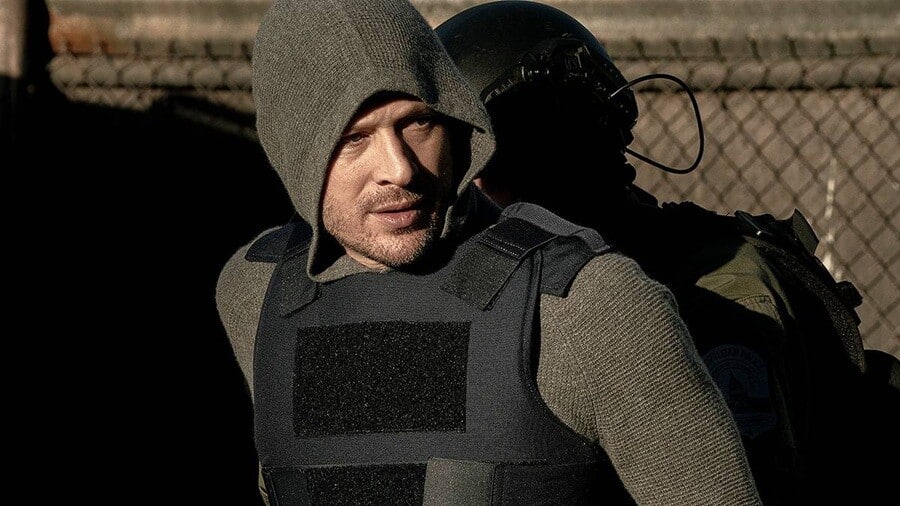
Staying with Criminal Minds: Evolution, our readers should know that our first contact happened because I was desperately searching for the hoodie worn by Zach Gilford in the latest season (laughs). His character, Elias Voit, evolved a lot in season 18: he develops empathy and shifts from being an antagonist to a character that the BAU team—and the audience—grow attached to. How did you take this evolution into account in his outfits this season?
Whitney: It always goes back to character and backstory for me. I think about where he comes from and how he’s evolving, then I translate that into the clothing. Where would he get those clothes? What is he doing, and how would he decide what to wear? Of course, I have to make it all work for TV as well!
Voit underwent quite a transformation in S18 and I aimed to translate that into the costumes using more textures and softer silhouettes. I wanted to make him feel more approachable to the audience, which is why he is in more soft sweaters, unstructured shirts, and sneakers versus the steel-toe boots and work clothing of serial killer Voit.
After more than twenty years in your career, what still excites you about this work, and what advice would you give to someone aspiring to become a Costume Designer today?
Whitney: It’s never boring! Every job is different, and every script brings its own unique challenges. I love being creative and coming up with solutions, so this job keeps me on my toes. For anyone aspiring to be a Costume Designer, I’d say educate yourself as much as possible and, since we live in an increasingly digital world, become familiar with the digital tools of the trade. The field is always evolving.
We’ve reached the end of this interview. Thank you, Whitney, for taking the time to share your experience with us.
Whitney: My pleasure! It’s always fun to share my part of the entertainment industry. These interviews give me a renewed sense of love and respect for such a unique job that I get the privilege of doing every day.
Interview conducted by Thomas O. for Eklecty-City.fr, who thanks Whitney Galitz for taking part in this conversation.